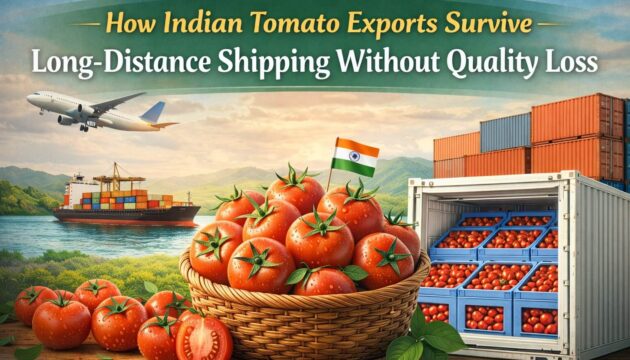
Long-distance shipping of fresh produce is one of the toughest challenges in global trade, yet tomato export from India continues to grow steadily. Thanks to improved cold-chain infrastructure, better packaging, and advanced handling practices, Indian tomato exporters are successfully supplying distant markets without compromising freshness. Today, tomato exporters in India ship to the Middle East, Southeast Asia, and select European markets while meeting strict quality standards.
This guide explains the exact systems, technologies, and best practices that help export quality tomatoes from India reach international buyers in excellent condition despite long transit times.
Tomato Export from India: Demand, Markets & Challenges
Global demand for fresh tomatoes is rising due to urbanization and year-round consumption. Importers seek reliable suppliers who can deliver consistent quality at competitive rates. Buyers who want to buy tomatoes in bulk from India benefit from India’s wide production base and seasonal availability.
Key challenges exporters face:
- Short shelf life
- Temperature sensitivity
- Moisture control
- Transit delays
- Import compliance
Overcoming these challenges is what sets reliable exporters apart.
How Indian Exporters Maintain Quality During Long Shipping
1. Pre-Harvest & Harvesting Practices
Quality starts at the farm. Export-grade tomatoes are harvested at the right maturity stage—firm, uniform color, and minimal surface defects. Controlled harvesting reduces bruising and microbial contamination.
2. Sorting, Grading & Pre-Cooling
After harvest, tomatoes are sorted and graded by size and quality. Pre-cooling quickly removes field heat, slowing respiration and extending shelf life. Wholesale tomato suppliers India increasingly use forced-air cooling for export consignments.
3. Export-Grade Packaging
Proper packaging prevents crushing and moisture buildup. Exporters use:
- Ventilated crates
- Food-grade liners
- Cushioning materials
- Stackable cartons
Good packaging is essential for export quality tomatoes from India to withstand handling and vibration during transit.
4. Cold Chain & Temperature Control
Temperature-controlled logistics are non-negotiable. From packhouse to port, tomatoes are kept in refrigerated trucks and reefer containers. Maintaining consistent temperature and humidity prevents spoilage and weight loss.
5. Controlled Atmosphere & Ethylene Management
Some exporters use controlled atmosphere packaging and ethylene absorbers to slow ripening. This extends shelf life for long-haul shipments to distant markets.
Logistics Planning & Transit Optimization
Efficient logistics reduce time-to-market. Exporters plan:
- Fast customs clearance
- Direct shipping routes
- Backup reefer availability
- Real-time temperature monitoring
Working with experienced tomato export suppliers in India ensures smoother transit and fewer delays.
Compliance, Documentation & Quality Assurance
To meet import standards, exporters provide:
- Phytosanitary certificates
- Residue test reports
- Certificates of origin
- Quality inspection reports
A professional tomato export company in India also ensures packaging and labeling comply with destination country regulations. Exporters that document every stage of the cold chain build stronger buyer trust.
Pricing, Risk Management & Buyer Expectations
Tomato export price from India varies by season, variety, packaging, and destination. Transparent pricing helps buyers plan procurement. Exporters manage risks by:
- Using cargo insurance
- Setting quality tolerance clauses
- Offering trial shipments
- Providing post-shipment support
Reliable communication reduces disputes and improves repeat business.
How Exporters Scale Long-Distance Tomato Shipments
To scale exports without quality loss, exporters invest in:
- Modern packhouses
- Farmer training programs
- Cold storage facilities
- Long-term shipping contracts
Export-focused businesses like The Sunshine Foods show how structured sourcing and cold-chain investment can support consistent long-distance shipments. With process-driven quality checks, The Sunshine Foods demonstrates how exporters can maintain freshness even on extended routes.